
Writing
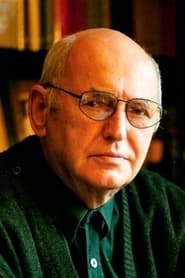
Jerzy Stefan Stawiński
Born — Died
1921-07-01 — 2010-06-12
Place of birth
Zakręt k. Otwocka, mazowieckie, Polska
Known for
Writing
Credits
34 titles
Jerzy Stefan Stawiński (July 1, 1921 – June 12, 2010) was a Polish screenwriter and film director. Beginning in 1957 he had written or co-written 29 films. He wrote a segment of the film Love at Twenty, which was entered into the 12th Berlin International Film Festival. He grew up in the Żoliborz district of Warsaw.
Known for
 6.7
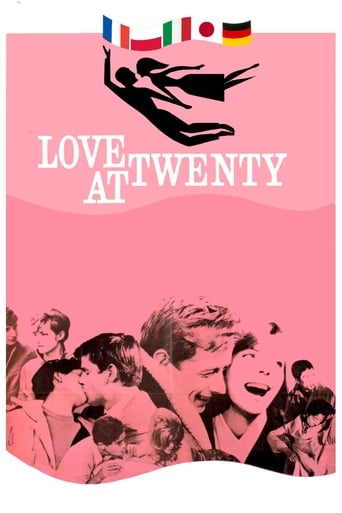
6.7Love at Twenty unites five directors from five different countries to present their different perspectives on what love really is at the age of 20. The episodes are united with the score of Georges Delerue and still photos of Henri Cartier-Bresson.
Love at Twenty
1962
 6.8
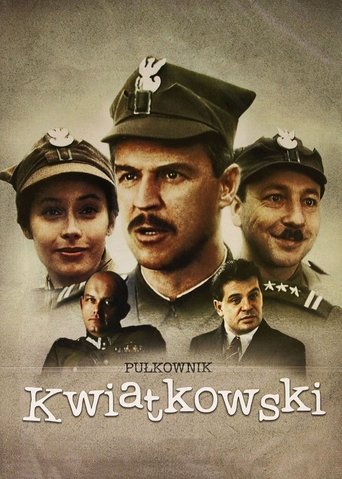
6.8Military doctor Kwiatkowski, serving in a barracks hospital on the Western Territories, is rewarded with a week’s leave after successfully operating on Colonel Kiziora of the UB. He and his friend steal a truck bound for Warsaw, where among the ruins of his former home he meets his prewar neighbor Krysia, instantly falls in love, and, after a brawl with a Russian officer at a dance in the surviving “Polonia” hotel, pretends to be a high-ranking UB colonel to save face.
Colonel Kwiatkowski
1996
 7.2
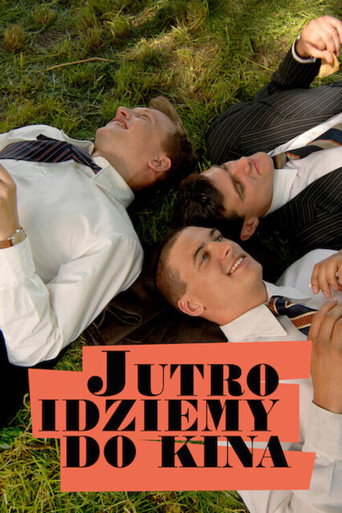
7.2Three high school graduates prepare to start the next chapter of their lives, but the outbreak of World War II may derail their dreams forever.
Tomorrow, We're Going to the Movies
2007
 7.1
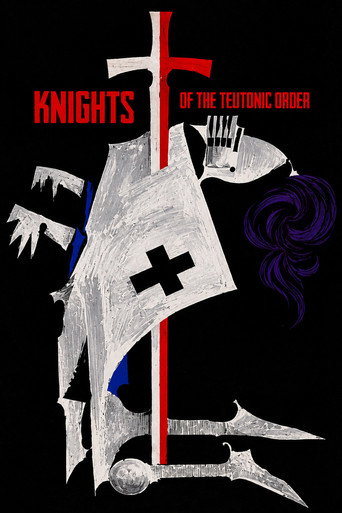
7.1A tale of a young impoverished nobleman, who with his uncle returns from a war against the order of the Teutonic Knights in Lithuania. He falls in love with a beautiful woman and pledges an oath to bring her "three trophies" from the Teutonic Knights.
Knights of the Teutonic Order
1960
 7.6
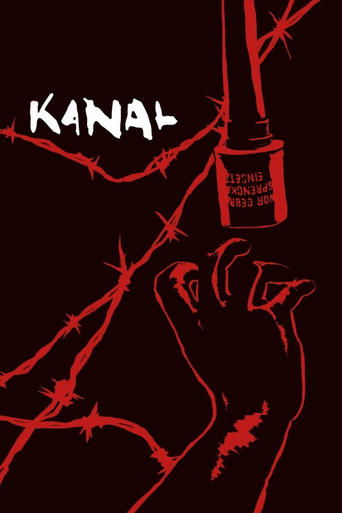
7.6In the last few days of the Warsaw Uprising during World War II, a modest group of Resistance members remains. The band must take refuge in the sewers under the orders of leader Zadra, but it's only a matter of time before they will have to emerge. However, when they try, they are met only with intense hostility from the Nazis. Despite their attempts stay resolute through immense mental strain, it becomes increasingly apparent that they may be doomed.
Kanal
1957
 7.3
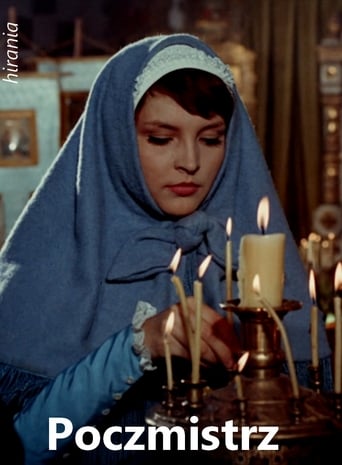
7.3Post clerk's young daughter runs away from home with a tsarist officer.
Poczmistrz
1968
Behind the camera
6.7Love at Twenty unites five directors from five different countries to present their different perspectives on what love really is at the age of 20. The episodes are united with the score of Georges Delerue and still photos of Henri Cartier-Bresson.
Love at Twenty
1962
6.8Military doctor Kwiatkowski, serving in a barracks hospital on the Western Territories, is rewarded with a week’s leave after successfully operating on Colonel Kiziora of the UB. He and his friend steal a truck bound for Warsaw, where among the ruins of his former home he meets his prewar neighbor Krysia, instantly falls in love, and, after a brawl with a Russian officer at a dance in the surviving “Polonia” hotel, pretends to be a high-ranking UB colonel to save face.
Colonel Kwiatkowski
1996
7.2Three high school graduates prepare to start the next chapter of their lives, but the outbreak of World War II may derail their dreams forever.
Tomorrow, We're Going to the Movies
2007
7.1A tale of a young impoverished nobleman, who with his uncle returns from a war against the order of the Teutonic Knights in Lithuania. He falls in love with a beautiful woman and pledges an oath to bring her "three trophies" from the Teutonic Knights.
Knights of the Teutonic Order
1960
7.6In the last few days of the Warsaw Uprising during World War II, a modest group of Resistance members remains. The band must take refuge in the sewers under the orders of leader Zadra, but it's only a matter of time before they will have to emerge. However, when they try, they are met only with intense hostility from the Nazis. Despite their attempts stay resolute through immense mental strain, it becomes increasingly apparent that they may be doomed.
Kanal
1957
7.3Post clerk's young daughter runs away from home with a tsarist officer.
Poczmistrz
1968
 6.9
6.9Tells two tales set during WWII: A seemingly feckless and selfish man finally takes up arms in the national struggle against the Nazis. Set in a POW camp, Polish inmates cling to their hopes for an eventual escape, encouraged by the legendary escape of one of their own.
Eroica
1958
 6.8
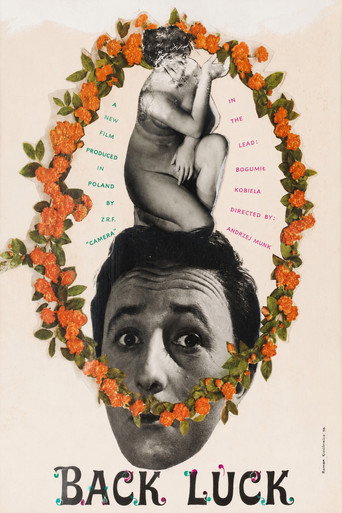
6.8To convince the prison warden against releasing him, a middle-aged Polish man recounts his life, one he considers to have been characterized by exceptionally bad luck.
Bad Luck
1960
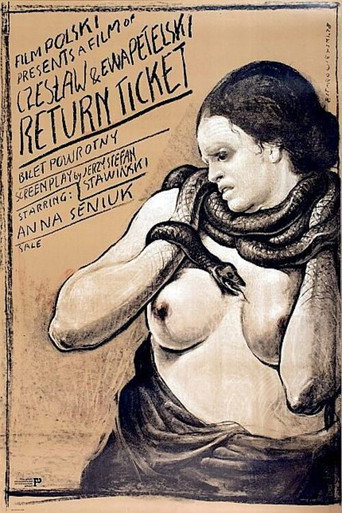 7.2
7.2A young peasant girl, Antonina, emigrates for bread to Canada. She stays with her uncle, who offers her marriage, but Antonina does not accept the offer. She marries a farmer from a nearby village, surreptitiously puts away pennies to pennies and sends to Poland, her son to build a house. When her husband finds out, he catcalls her in a rage and throws her out. She returns to the country, and what does she find?
Return Ticket
1979
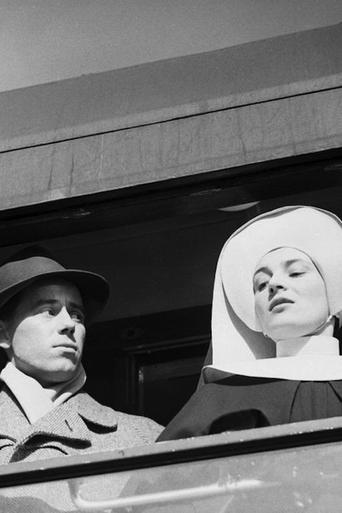 NR
NROriginally, Munk intended Eroica to be a triptych with Con bravura being the first part, but he ultimately gave up on this film, deeming it weaker artistically than the two counterparts. Con bravura is about conspiracy conflating the paths of a rather unconventional nun and an intrigued young man – each of them bears secrets and the encounter could incite a flaming romance, though one suffocated by war.Munk set the film in the mountain capital of Zakopane and its vicinity, allowing breathtaking views from a cable car and using his experiences of the Nazi occupation in the area to add gritty reality. The director plays a cameo as a priest with several of his industry friends also making appearances.
Con bravura
1972
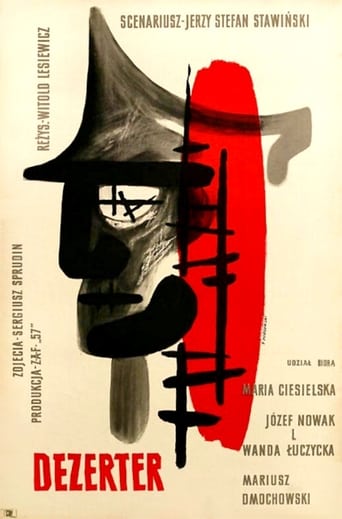 6.5
6.5A Pole incorporated into the Wehrmacht deserts, hiding in a coal mine ...
Dezerter
1958
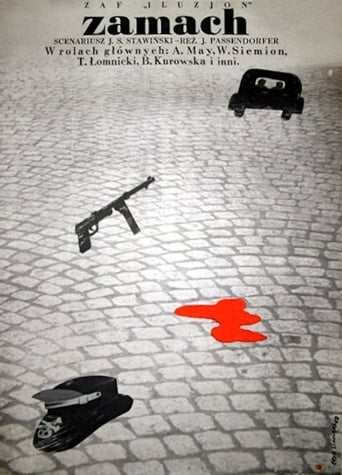 7.0
7.0Set in the occupied Warsaw, the film tells the story of the mission carried out by the student underground resistance group to execute the hated SS General Franz Kutchera.
The Attempt
1959
 6.0
6.0Further fate of Dzidzius Górkiewicz, the protagonist of Andrzej Munk's film "Eroica". After retiring, Górkiewicz moved to a small town near Warsaw. After years filled with doing numerous, not always clean businesses, he leads a quiet, honest life of a provincial. A group of local businessmen see him as an ideal candidate for the new mayor. Gorkiewicz himself is undecided about what to do. Then he dreams of a meeting of the municipal council, where he wants to present his program.
Straszny sen Dzidziusia Górkiewicza
1994
 6.5
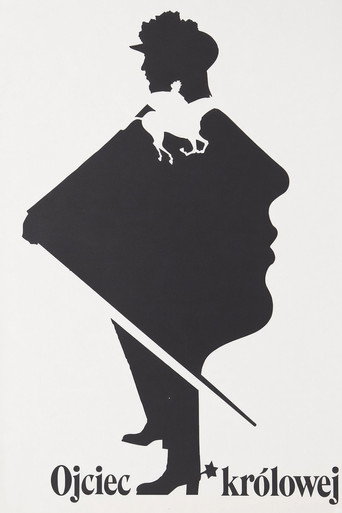
6.5A French nobleman is sent to Poland to bring the father of Queen Marie Casimire back to France, as requested by Louis XIV's minister. While carrying out his mission at the court of King Jan III Sobieski, he becomes entangled in political intrigue and falls for the beautiful woman caring for the old marquis.
Father of the Queen
1980
 NR
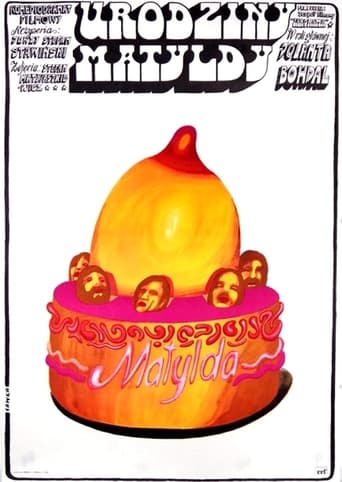
NRMatylda reflects on her life on her 30th birthday.
Matylda's Birthday
1975
 7.3
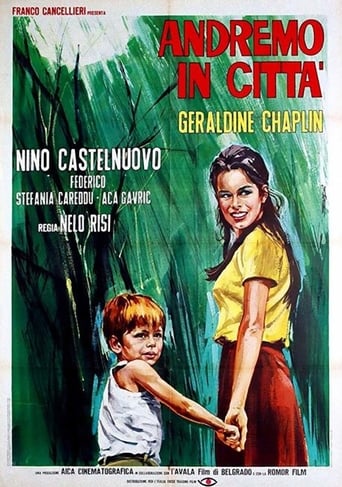
7.3"Andremo in città" (We'll Go to the City) is a 1966 Italian drama film directed by Nelo Risi. It is based on the novel of the same name by Edith Bruck, Risi's wife. Bruck, a Hungarian concentration camp-survivor, settled in Italy after the Second World War and wrote about her experiences in autobiographical and fictional formats.[1] The film stars Geraldine Chaplin and Nino Castelnuovo.
We'll Go to the City
1966
 4.4
4.4A teenager starts to rebel against his parents in increasingly radical ways after being forbidden from going out with his girlfriend.
Who Believes in Storks?
1971
4.4A teenager starts to rebel against his parents in increasingly radical ways after being forbidden from going out with his girlfriend.
Who Believes in Storks?
1971
 8.5
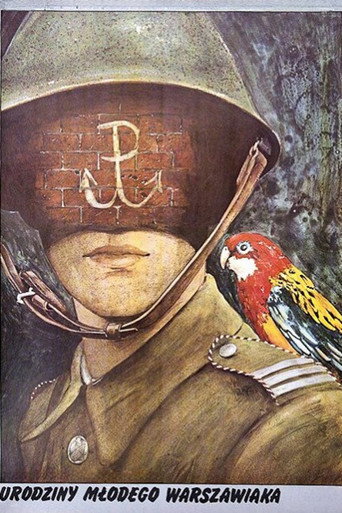
8.5The four sequences in the film cover four days in a life of young Warsaw lad in September 1938, 1939, 1943 and 1944. In the first sequence Jurek decides not to study in the Sorbonne but enlists in a Polish military school instead. In the second sequence the war starts and Warsaw is occupied. In the third sequence he works in the underground resistance. The final sequence takes place during the Warsaw uprising.
The Birthday
1980
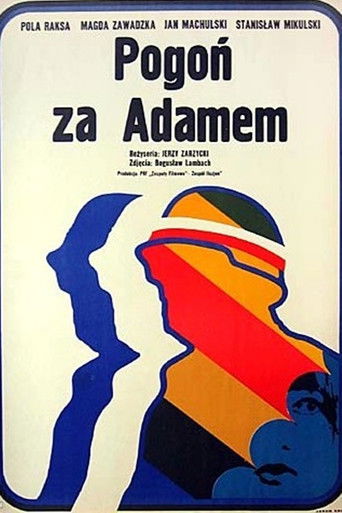 6.0
6.0A film director uses a South American premiere of his latest picture to reconnect with his old friends from the Warsaw Uprising, the protagonists of his movie.
Pogoń za Adamem
1970
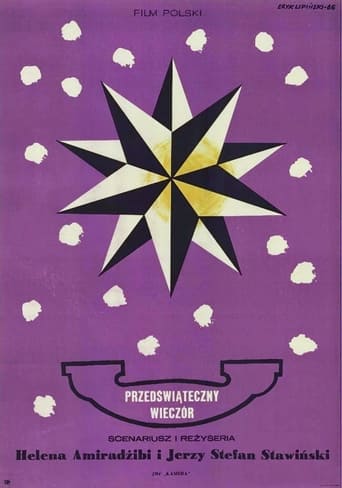 6.4
6.4A man's surreal search for a woman named Eva on Christmas Eve.
Christmas Eve
1966
6.4A man's surreal search for a woman named Eva on Christmas Eve.
Christmas Eve
1966
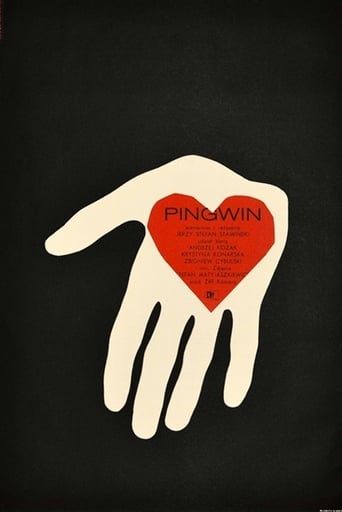 6.3
6.3A shy Warsaw university student is in love with a girl who pays no attention to him. Change comes after her intimate love letters are read publicly at a party.
Penguin
1965
6.3A shy Warsaw university student is in love with a girl who pays no attention to him. Change comes after her intimate love letters are read publicly at a party.
Penguin
1965
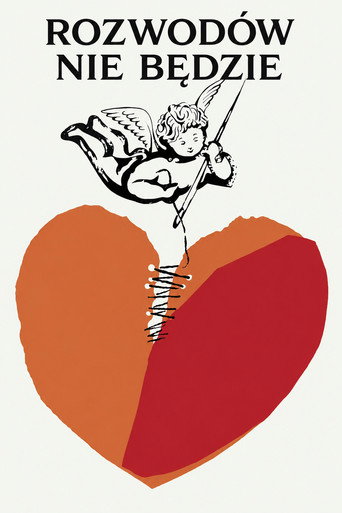 6.8
6.8Three short segments about love, all set in Warsaw’s Civil Registry Office at the corner of Nowy Świat and Aleje Jerozolimskie, against a vivid backdrop of early 1960s city life.
No More Divorces
1964
6.8Three short segments about love, all set in Warsaw’s Civil Registry Office at the corner of Nowy Świat and Aleje Jerozolimskie, against a vivid backdrop of early 1960s city life.
No More Divorces
1964
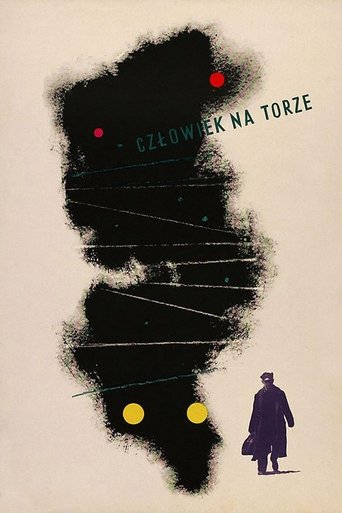 6.9
6.9One night in 1950 a passenger train runs over a man, who turns out to be the veteran train engineer Władysław Orzechowski, know for his old ways and stern demeanor. As the inquiry panel tries to deduce why would a man like Orzechowski jump in front of a moving train several of the people involved in the case are interrogated, each telling their own version of the story. Can the panel arrive at the truth in a world where workers unite, inferior coal is a badge of honor, and the old order is suspect?
Man on the Tracks
1957
On August 1, 1944, Warsaw holds its breath as Home Army couriers spread word that “W-hour” is at 17:00. A platoon under “Czarny” must assault German barracks without the expected backup—an order they follow at the risk of collective suicide.
Godzina W
1979
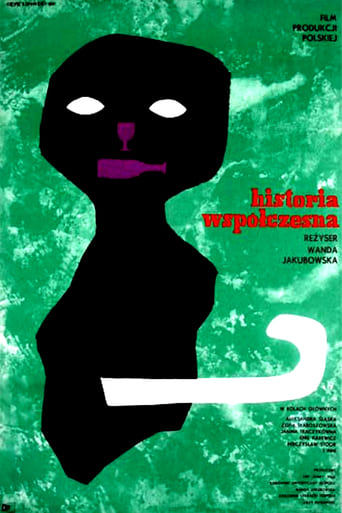 8.0
8.0Based on real events story of stealing methyl alcohol causing mass poisoning in town.
It Started Yesterday
1961
A moral story about two people who have completely different attitudes to life and people. The duel of the heroes ends tragically.
Zabijaka
1967
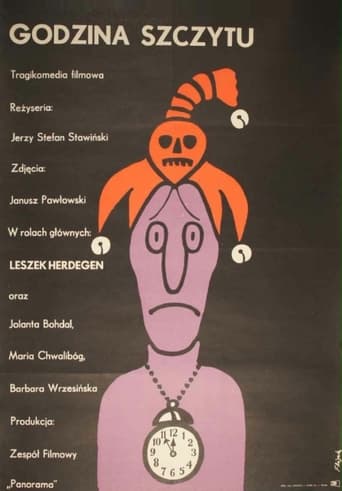 5.5
5.5The life of engineer Maksymowicz changes dramatically when he accidentally learns that he is terminally ill.
Rush Hour
1974
5.5The life of engineer Maksymowicz changes dramatically when he accidentally learns that he is terminally ill.
Rush Hour
1974
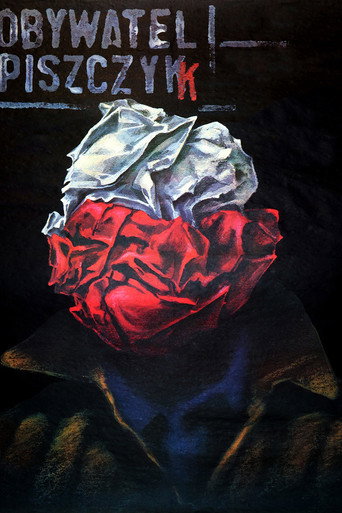 5.9
5.9This film is a sequel to Munk's Zezowate Szczescie and it's much the same, only more so. The film begins in a cinema, where the last scenes of Zezowate Szczescie are being shown. Born unlucky, a victim of the errors and distortions of Stalinism, he is released in 1956. He meets a politically feverish woman, her influential parents, and finally becomes the father of her child. But bad luck, or perhaps an unlucky era, will not let him forget.
Citizen Piszczyk
1989
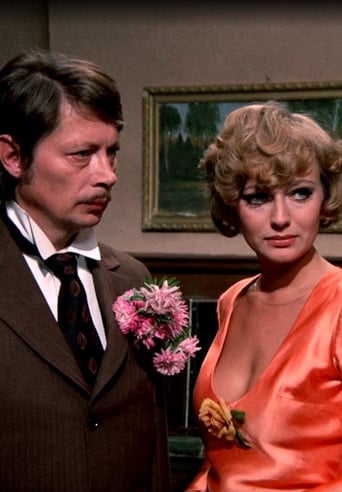 NR
NRA timid bank clerk is pressured by gangsters, his girlfriend and his fellow employees to help steal the bank's supply of dollars.
Fortune
1973