
Franchise
Hapax Legomena 7-Part Series
Hapax Legomena (1971-1972), whose title Frampton translated as “things said once,” turned out, unfortunately, to be a hapax legomenon within Frampton’s filmography, as it is the only multi-part, interlocking (but separable), set of films that he completed
Films
7
Average rating
6.7 / 10
Release span
1971 – 1972
 6.6
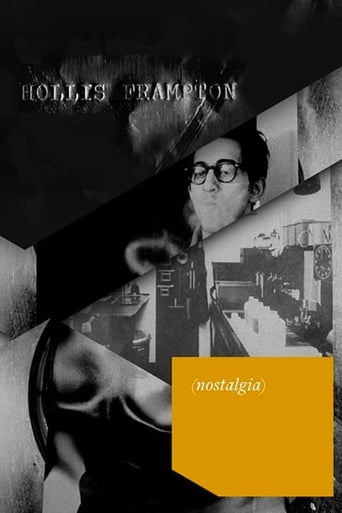
6.6Michael Snow narrates a series of Hollis Frampton's photographs (speaking as Frampton, in the first person)—as each picture catches fire on a hot plate.
Hapax Legomena I: (nostalgia)
1971
 6.2
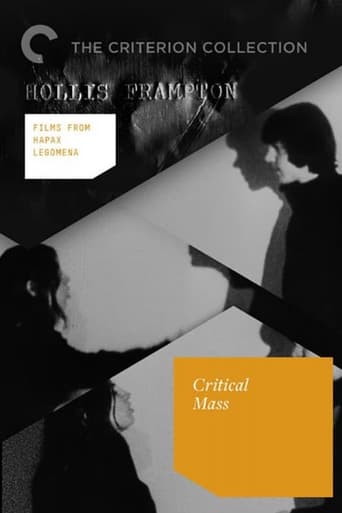
6.2A man and a woman have been living together for six months. After disappearing for two days, the man returns and acts as if nothing has happened, refusing to say where he was.
Hapax Legomena III: Critical Mass
1971
 6.4
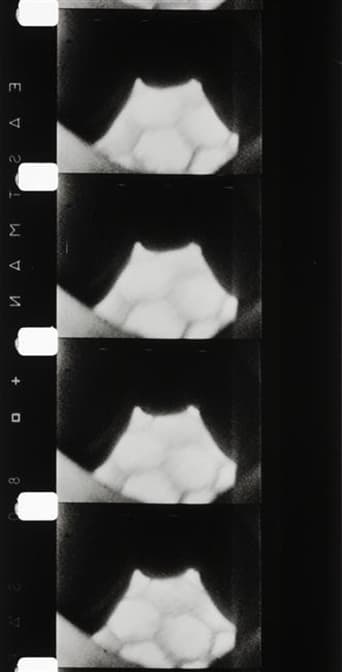
6.4“This film metaphors an entire human life: birth, sex, death – the framing device is the fingers and palm of the maker’s hand, wherein others only attempt to read the future.” – Stan Brakhage
Hapax Legomena IV: Travelling Matte
1971
 7.9
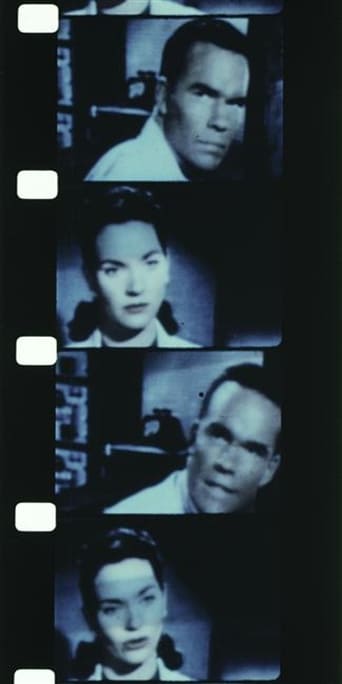
7.9“A ‘baroque’ summary of film’s historic internal conflicts, chiefly those between narrative and metric/plastic montage; and between illusionist and graphic space.” – HF
Hapax Legomena VI: Remote Control
1972
 7.8
7.8“The frame itself, which divides what is present to consciousness from what is absolutely elsewhere, is tempered here by the breath, tremor, heartbeat of the perceiver. People this given space, if you will, with images of your own devising.” – HF
Hapax Legomena VII: Special Effects
1972
 5.2
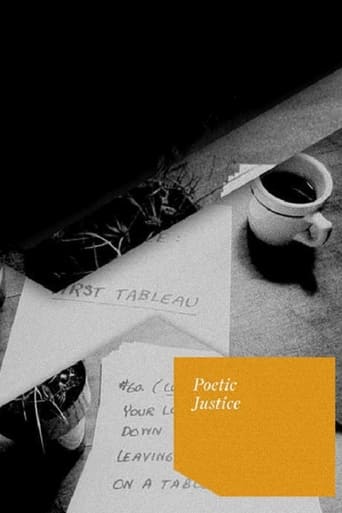
5.2Poetic Justice presents the viewer with an ordinary domestic scene: a stack of papers, a cup of coffee, and a potted cactus on a table. The sheets of paper compose a script that provides handwritten, frame-by-frame instructions for a film that unfolds only in the mind of the viewer.
Hapax Legomena II: Poetic Justice
1972
 6.6
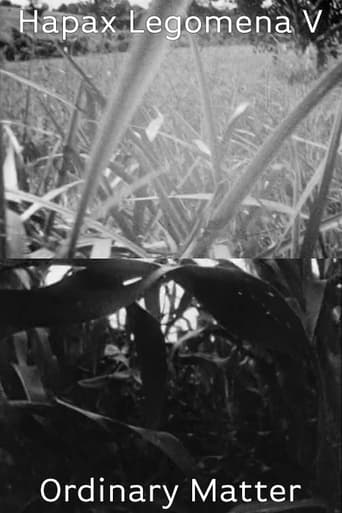
6.6"A vision of a journey, during which the eye of the mind drives headlong through Salisbury Cloister (a monument to enclosure), Brooklyn Bridge (a monument to connection), Stonehenge (a monument to the intercourse between consciousness and LIGHT)... visiting along the way diverse meadows, barns, waters where I now live; and ending in the remembered cornfields of my childhood. The soundtrack annexes, as mantram, the Wade-Giles syllabary of the Chinese language." (H.F.)
Hapax Legomena V: Ordinary Matter
1972