
Franchise
My Hand Outstretched to the Winged Distance and Sightless Measure
My Hand Outstretched to the Winged Distance and Sightless Measure is a film cycle by American avant-garde filmmaker Robert Beavers. It consists of eighteen films in three parts.
Films
18
Average rating
6.9 / 10
Release span
1967 – 2003
 NR
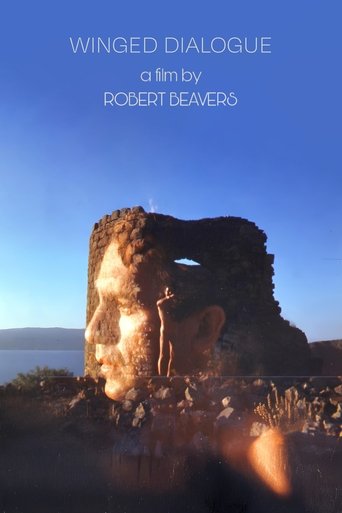
Winged Dialogue details with growing clarity the desperate beauty and sexuality of the body animated by its soul, essence blindly reaching out, touching, in brilliant patterns through and beyond those of the vanishing images, expressed vividly in the after-image on the mind, on the soul’s eye.
Winged Dialogue
1967
 7.0
Shedding all traces of narrative in Plan of Brussels, Beavers filmed himself in a hotel room, both at his work desk and lying naked on the bed, while in rapid rhythmic cutting, and sometime in superimposition, the phantasmagoria of people he met in Brussels and images from the streets flood his mind.
Plan of Brussels
1968
 6.0
The film is seen as though upon and through the structure of its spiritual partitions. One might say that there are three elements or levels to the images: narrative, descriptive or analytic, and abstract. The Count of Days is not an account so much as an accounting of the essence of the days in which three separate persons are related at points … a penetration through the masks and habits of these days to reveal the nature of the charade and the arena in which it is enacted.
The Count of Days
1969
 8.0
In Palinode a disk-shaped matte continually shifting in and out of focus alternately blocks part of the image or contains it. Its respiratory rhythm matches operatic fragments of Wladimir Vogel’s Wagadu, as the camera studies a middle-aged male singer in Zurich, singing, eating, window shopping, meeting a young girl. The filmmaker told himself, ‘Don’t let yourself know what that film is about while you are making it.’
Palinode
1970
 NR
There is a balance in Diminished Frame between a sense of the past seen in the views of West Berlin, filmed in black& white and a sense of the present in which I filmed myself showing how the colour is being created by placing filters in the camera’s aperture. It is the space of the city and of the filmmaker. I search for signs of war’s aftermath and a few moments of daily life.
Diminished Frame
1971
 6.5
The first half of the film explores delicate nuances of lighting, colour and depth as Beavers shoots the face of a young man in various locales on the Greek island of Hydra, using a variety of customized masks and filters. The man’s face remains constant throughout, surrounded by iconic elements in the landscape, like a pulsating Renaissance portrait. Still Light brings to mind any number of structuralist binarisms: youth and age, creation and criticism, action and reflection, living landscape and mummified text.
Still Light
1971
 7.0
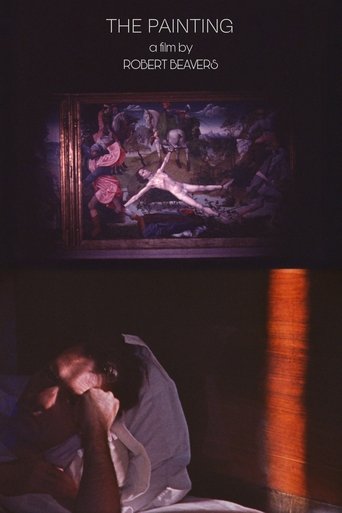
The Painting intercuts shots of traffic navigating the old-world remnants of downtown Bern, Switzerland, with details from a 15th-century altarpiece, “The Martyrdom of St. Hippolytus”. The painting shows the calm, near-naked saint in a peaceful landscape, a frozen moment before four horses tear his body to pieces while an audience of soigné nobles look on; in the movie’s revised version, Beavers gives it a comparably rarefied psychodramatic jolt, juxtaposing shots of Gregory Markopoulos, bisected by shafts of light, with a torn photo of himself and the recurring image of a shattered windowpane.
The Painting
1972
 6.3
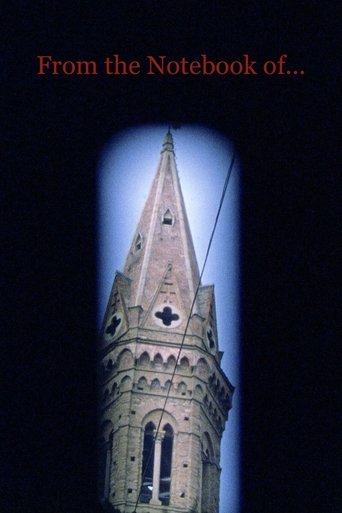
From the Notebook of … was shot in Florence and takes as its point of departure Leonardo da Vinci’s notebooks and Paul Valéry’s essay on da Vinci’s process. These two elements suggest an implicit comparison between the treatment of space in Renaissance art and the moving image. The film marks a critical development in the artist’s work in that he repeatedly employs a series of rapid pans and upward tilts along the city’s buildings or facades, often integrating glimpses of his own face. As Beavers notes in his writing on the film, the camera movements are tied to the filmmakers’ presence and suggests his investigative gaze.
From the Notebook of...
1972
 8.0
Bracing in its simplicity, Work done was shot in Florence and the Alps, and celebrates an archaic Europe. Contemplating a stone vault cooled by blocks of ice or handstiching of a massive tome or the frying of a local delicacy, Beavers considers human activities without dwelling on human protagonists. Like many of Beavers’ films, Work done is based on a series of textural transformative equivalences: the workshop and the field, the book and the forest, the mound of cobblestones and a distant mountain.
Work Done
1973
 6.2
Ruskin visits the sites of John Ruskin’s work: London, the Alps and, above all, Venice, where the camera’s attention to masonry and the interaction of architecture and water mimics the author’s descriptive analysis of the “stones” of the city. The sound of pages turning and the image of a book, Ruskin’s ‘Unto This Last’, forcibly reminds us that a poet’s perceptions and in this case his political economy, are preserved and reawakened through acts of reading and writing.
Ruskin
1974
 6.2
AMOR is an exquisite lyric, shot in Rome and at the natural theatre of Salzburg. The recurring sounds of cutting cloth, hands clapping, hammering, and tapping underline the associations of the montage of short camera movements, which bring together the making of a suit, the restoration of a building, and details of a figure, presumably Beavers himself, standing in the natural theatre in a new suit, making a series of hand movements and gestures. A handsomely designed Italian banknote suggests the aesthetic economy of the film: the tailoring, trimming, and chiseling point to the editing of the film itself.
AMOR
1980
 6.0
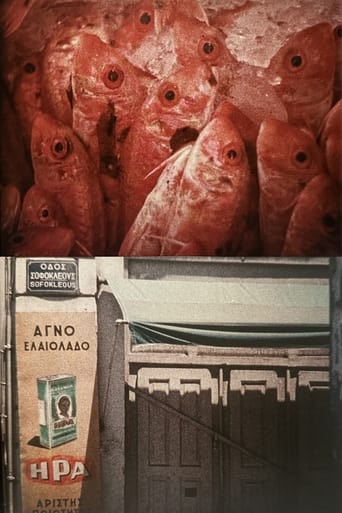
The details of the young actor’s face – his eyes, eyebrows, earlobe, chin, etc. – are set opposite the old buildings in the market quarter of Athens, where every street is named after a classic ancient Greek playwrite. In this setting of intense stillness, sometimes interrupted by sudden sounds and movements in the streets, he speaks a single word, “teleftea”, meaning the last (one), and as he repeats this word, it moves differently each time across his face and gains another sense from one scene to the next, suggesting the uncanny proximity of eroticism, the sacred and chance.
Efpsychi
1983
 8.0
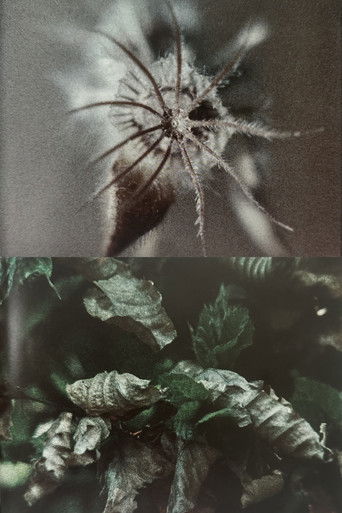
This magnificent landscape, both hot and dry, is far from sterile; rather, the heat and dryness produce a distinct type of life, seen in the perfect forms of the wild grass and seed pods, the herds of goats as well as in the naked figure. The torso, in itself, and more, the image which it creates in this light. The sounds of the shepherd’s signals and the flute’s phrase are heard. And the goats’ bells. Imagine the bell’s clapper moving from side to side with the goat’s movements like my quick side-to-side camera movements, which increase in pace and reach a vibrant ostinato.
Wingseed
1985
 8.0
The title refers to the colonnades that led to the shady groves of the ancient Lyceum, here remembered in shots of industrial arcades, bathed in golden morning light, as quietly empty of human figures as Atget’s survey photos. The rest of the film presents luscious shots of a wooded stream and hazy glen, portrayed with the careful composition of 19th century landscape painting. An ineffable, unnameable immanence flows through the images of The Stoas, a kind of presence of the human soul expressed through the sympathetic absence of the human figure.
The Stoas
1997
 6.8
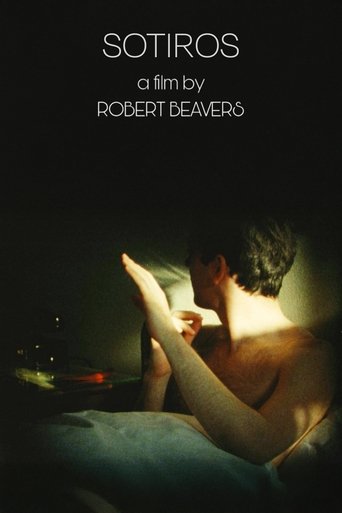
In Sotiros, there is an unspoken dialogue and a seen dialogue, The latter is held between the intertitles and the images; the former is moved by the tripod and by the emotions of the filmmaker. Both dialogues are interwoven with the sunlight’s movement as it circles the room, touching each wall and corner, detached and intimate.
Sotiros
2000
 6.2
What lives in the space between the stones, in the space cupped between my hand and my chest? Filmmaker/stonemason. A tower or ruin of remembrance. With each swing of the hammer I cut into the image and the sound rises from the chisel. A rhythm, marked by repetition and animated by variation; strokes of hammer and fist, resounding in dialogue. In this space which the film creates, emptiness gains a contour strong enough for the spectator to see more than the image – a space permitting vision in addition to sight.
The Ground
2001
 6.5
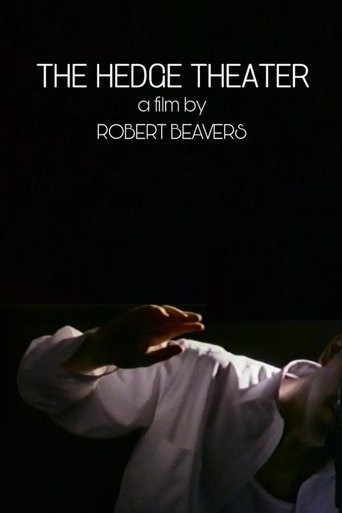
Some years after filming AMOR, I returned to Italy and found the source for a new film in the architecture of Borromini and in a grove of trees with empty birdcages. (A grove of trees, a rocolo, in which hunters would set out cages with decoys, called richiami, whose song attracted other birds.) The buoyant spaces of these cupolas, the sewing of a buttonhole, and the invisible bird hunt are all elements in the sustained dialogue of The Hedge Theatre.
The Hedge Theater
2002
 8.0
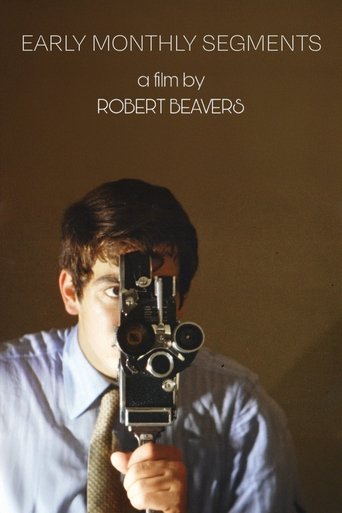
Early Monthly Segments, filmed when Beavers was 18 and 19 years old, now forms the opening to his film cycle, “My Hand Outstretched to the Winged Distance and Sightless Measure.” It is a highly stylized work of self-portraiture, depicting filmmaker and companion Gregory J. Markopoulos in their Swiss apartment. The film functions as a diary, capturing aspects of home life with precise attention to detail, documenting the familiar with great love and transforming objects and ordinary personal effects into a highly charged work of homoeroticism.
Early Monthly Segments
2003